
Know Your Ninjas: Josiah Pippel on American Ninja Warrior glory, the LA28 Olympic buzz and calluses


Josiah Pippel is a night owl. It’s not particularly by choice. But then again aren’t ninjas supposed to do their best work in the darkness?
Pippel didn’t have too long to savour what was undoubtedly the best work of his young life. Last month TV viewers in North America and across the world watched the 20-year-old earn the crown of American Ninja Warrior champion. The smash hit show which debuted on NBC in 2009 and helped spark an explosion in the interest and popularity of Obstacle Racing remains a cultural phenomenon.
By winning Season 18, Pippel didn’t just secure $250,000 of prizemoney – a lot of fame and adulation came with it. But most of that had to wait. Season 19 was rapidly beginning filming in Las Vegas and that’s where UIPM News tracked him down. Handling the media blitz that followed his victory means making sure the time difference but also sleep patterns match up to interview requests.
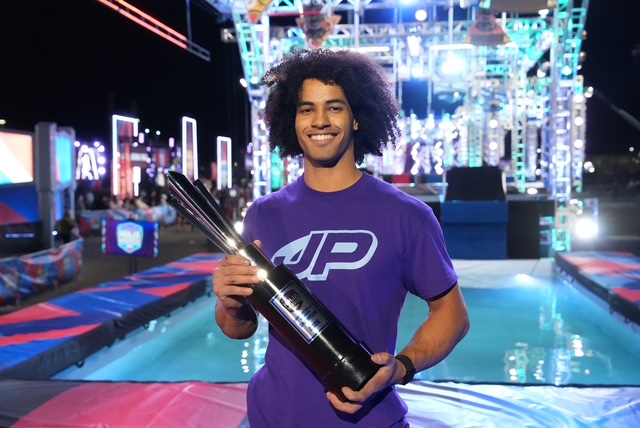
American Ninja Warrior is shot entirely at night, the dark desert skies offering a better TV backdrop and the cooler temperatures a help for competitors too. The thought of taking a break never crossed Pippel’s mind. He simply had to defend his crown.
“Coming off Season 18, I'm feeling so great and I honestly just wanted more. So when they announced season 19 and 20, I was in immediately. A bunch of people were asking me like, ‘now that you won, like, are you gonna stop?’ No, I want to keep going. I want to get two [champion’s titles], then hopefully three, because no one's ever done that before. We're in the middle of filming right now. Obviously, I can't say how it's going, but…I’m very, very excited for the next few seasons.”
Adapting to change is a key part of the sports of both Obstacle Racing and Pentathlon, which now share a governing body and a growing worldwide community. The Ninja Warrior entertainment concept itself has been through myriad evolutions in its history. In two years’ time Obstacle Racing will make its debut on the biggest stage of all, within the Pentathlon at the 2028 Olympic Games. That it does so under the Hollywood sign in Los Angeles feels only right.
Just as Pippel and his ANW rivals prove each season, the superstars of Pentathlon have also shown that Obstacle Racing, since its introduction as the sport’s new fifth discipline in recent years, makes for incredible drama on the big and small screen.
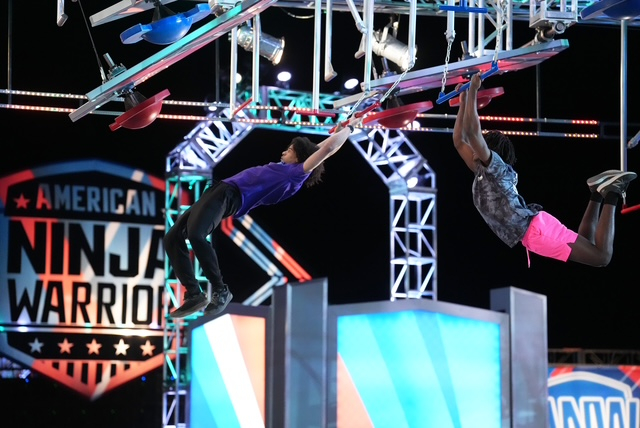
That enduring appeal means a lot to Pippel, who has been involved since his parents first bought him to a Ninja gym at the age of seven.
"It's really cool. I think Ninja, because it's a ‘fail-sport’, it has that coolness or ‘it factor’ because you really don't know what's gonna happen. People watch and, like, you can watch 10 of the best athletes in the world. And some random new person can come and win it all. It's ever-changing.
“Soccer, for example, is a ball in a field. The rules may change a little bit over time, but it's the same sport. Ninja? Every time you watch, it's gonna be a different course. It's different obstacles, different challenges, different formats. You can follow [it] for 10 years and always be entertained by something new, especially in an age where, like, people's attention span is so short. The fact that we have so many different leagues, different styles, and different obstacles that are challenging different things, is very attention grabbing.”
Mere months after leaving his teenage years behind, Pippel is remarkably future-focused. He coaches the next generation of Ninjas back home in New Jersey and through his company, Team Ninja Association, hopes to grow it further into a professional pursuit of its own. Spending over half of his life swinging and hanging and pulling his way through obstacles has made him resilient, he reflects.
“It honestly is the biggest part. I do a lot of talks to not only my students, [but also] at schools. That's one of our biggest topics. Ninja is such a ‘fail-sport’. It's not like football where, once you're good at it, you're pretty good at it and you stay at the top. Literally in Season 17, I failed obstacle two. It's very high highs and very low lows that happen very quickly. So we kind of tell everyone that, like, it's okay to fail, it's part of the process. You just have to be willing to get back up again.”
Letting the next generation see that play out on Olympic screens will only serve to spread the message further and wider than before, according to Pippel.
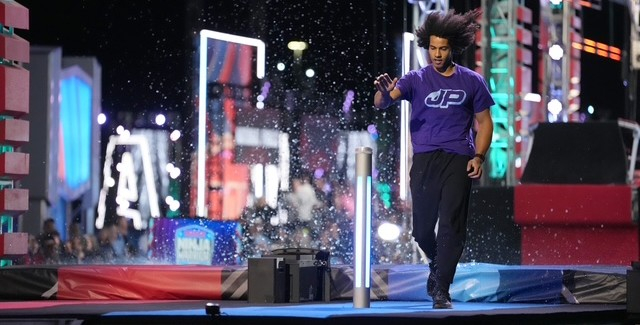
“It's been really cool to see the progression, how much people have been talking about Ninja being in the Olympics. It has spread a lot of awareness to the sport. With the seasons that we're filming now, there's a lot of encouragement: ‘This is going to be an Olympic sport!’ It's been neat to have people come up to me asking me if I'm going to compete in Los Angeles. I'm like, ‘guys, I don't know how to fence!’ But it's something I'm trying to go out and watch, at least, because it's close and could be really cool.”
Perhaps he could add his expertise to the broadcast as an Obstacle analyst?
“That would be awesome,” he smiles. "I'm trying to put myself in a position where I have value outside of just a competitor. Especially now that I am a champion, opportunities like that, I hope, will open up. I definitely want to go in some capacity because it is part of the future of my sport. It would be really cool to see what it's like and see if in the future it’s something that I would like to do after Ninja.”
Pippel is also keen to follow the prolific Beckstrand brothers, Luke and Kai, who went from stars of ANW to winning global gold at UIPM Obstacle World Championships in 2025 and 2026. Pippel ponders the possibility that somewhere down the line a Ninja Warrior champion could become an Olympic champion…
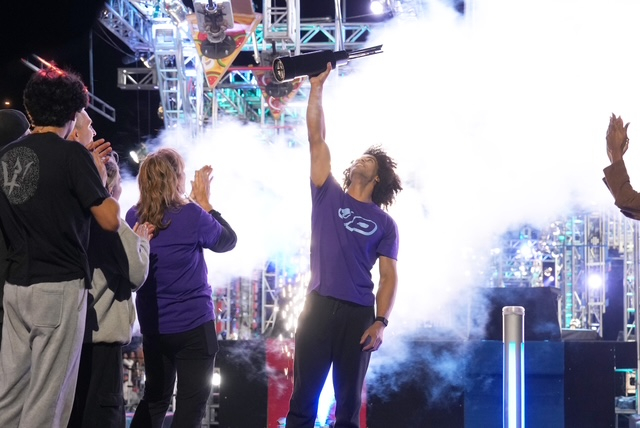
“That would be awesome. It's something that maybe I could get into, especially now that I said we may have two years off [filming ANW]. That would be awesome, and especially great for the sport, publicity wise, to have it in the Olympics, but to have one of our athletes be an Olympian and possibly an Olympic medallist would be such a cool thing.”
Once filming wraps, Pippel has a hectic schedule with events in Japan, Germany, Dubai and elsewhere. All part of the grind. He has huge respect for pentathletes who have to master not just one but five sports. But he has some key advice too.
When UIPM News caught up with men’s world champion Matej Lukes of Czechia recently he spoke of a common issue for the elite brigade as they continue to adapt to Obstacle Racing. Hand blisters. Having spent the majority of his life using his palms and fingers to get him to the top, Pippel tells Lukes and Co. to see developing that thick skin as something akin to developing a muscle.
“For the most part, I’m very callused,” Pippel laughs, holding up his hands to the screen. “I've been doing this since I was seven years old, so 13 years. My hands have become very adapted to that. I really don't get blisters or rips or anything anymore. All the reps on stuff over time has been intense – I had calluses on the sides of my fingers.
“It will get better for the pentathletes, but I know the struggle of starting. You get a rip, and then you're like, ‘how do I train through it?’ You have to just commit to it in the beginning and build those calluses, make your hands stronger. Just as your physical muscles and your brain is a muscle, your skin is also something very important for this sport.”
By Joe Callaghan