
Pentathlon Personalities: Dr Nicola Robinson MBE


Dr Nicola Robinson, Chair of the UIPM Para Pentathlon Commission, has been granted one of the most prestigious orders from the Royal Family in her native United Kingdom. Dr Robinson was awarded an MBE in the King’s Birthday Honours in recognition of her contribution to Pentathlon. In this extensive Q&A interview, UIPM News gets to the heart of what it takes to be a Para sports pioneer, as ‘Dr Nic’ outlines the unique value of this movement and its future direction of travel.
What was your reaction when you received the news that you would be receiving an MBE in the King’s Birthday Honours, and what does this recognition mean to you personally?
After I realised it wasn’t a car parking ticket I was genuinely lost for words, and those who know me will tell you that doesn’t happen often! Receiving this news felt surreal. I had to read the letter several times before it sank in. When it did, my first thought was not of myself but of every athlete, every volunteer, every family who has ever trusted us with their journey in Pentathlon.
Personally, this MBE represents something much bigger than any individual achievement. It is an acknowledgement that inclusive sport matters, that bringing Pentathlon to communities who have never encountered it, and opening the doors of Para Pentathlon to athletes who were told sport wasn’t for them, is work that has real and lasting value. To have that recognised at the highest level, in the King’s Birthday Honours, is both humbling and energising. It reminds me why I do what I do, and it makes me more determined than ever to keep the momentum going.
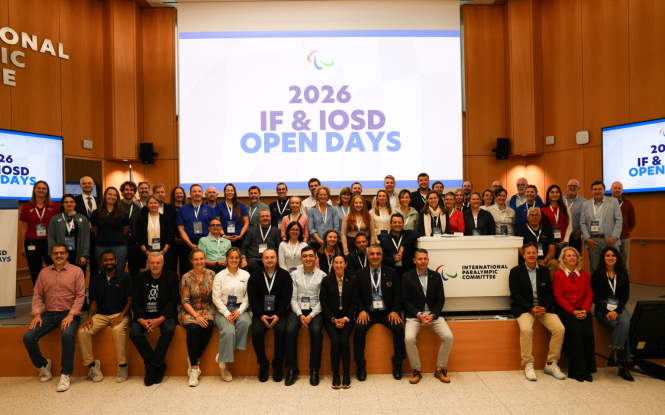
The honour recognises your work as a coach, researcher and advocate for inclusive sport. Looking back, what achievements are you most proud of?
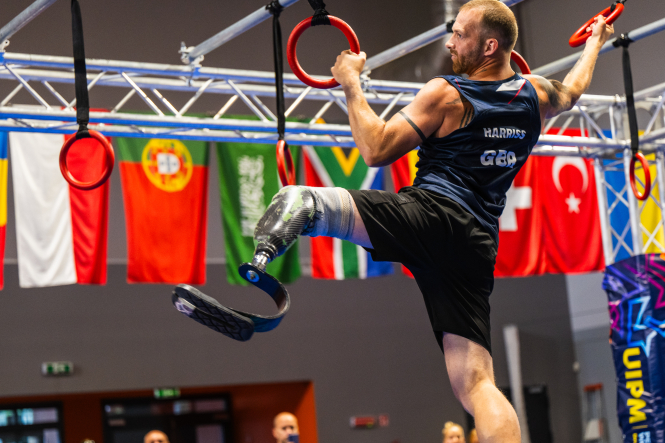
There are so many moments that stay with me, but if I’m honest, the achievements I am most proud of are not the ones with trophies or titles attached. They are the human moments when you watch the impact for your work play out, from a young athlete realising they can achieve five green lights in Para Laser Run, to witnessing the crowd’s reaction to the Para Obstacle discipline in Druskininkai last summer, to providing creative tools for coach education that instil confidence and pride in embodying inclusive practice.
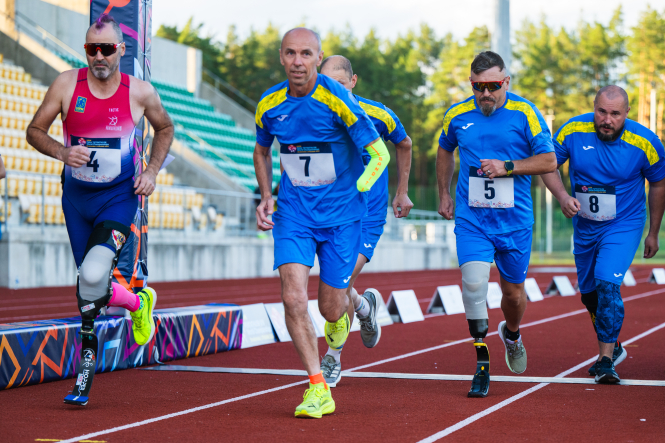
I am very proud of building the North West Pentathlon Hub in England into a genuine community of sport, where families from all backgrounds have discovered something extraordinary in themselves through UIPM Sports. I am proud of the work of the UIPM Para Pentathlon Commission in creating the first-ever Para Tetrathlon World Championships in Lithuania in 2025.
I am proud of my research at Liverpool John Moores University, which has allowed me to ground this work in evidence and to advocate for inclusion not just in practice but in the academic literature supporting Classification systems. And I am proud of being part of a global movement, through my role as Chair of the Commission, that is genuinely changing what this sport looks like and who it belongs to.
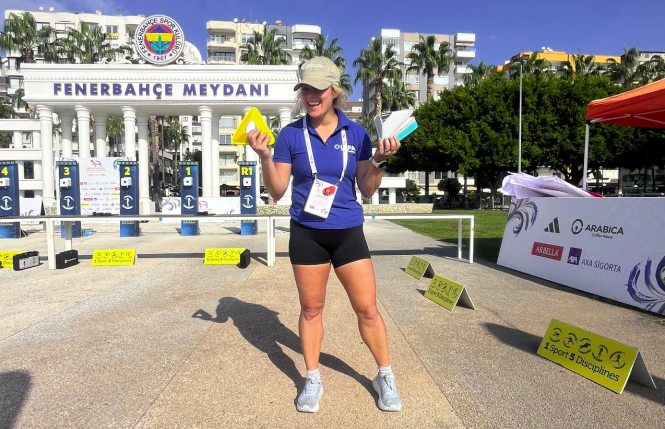
Inclusion has been a driving force throughout your career. What inspired your commitment to creating opportunities for more people to participate in Pentathlon?
My commitment to inclusion was shaped very early as my sister Fi was born with a very rare condition which affects her physically and intellectually. I was fortunate to be on the Pentathlon GB pathway and I always wondered why my sister couldn’t be part of it, too, so wanted to make it my mission to make sure she was also included.
By the simple, powerful experience of seeing what happens when someone discovers sport for the first time and realises what their body and mind can do, that moment of transformation never gets old.
Throughout my career journey I saw, repeatedly, the barriers that existed: barriers of geography, of disability, of background, of expectation. I couldn’t accept that a sport as wonderful, as intellectually stimulating and as physically complete as Pentathlon should be available only to a privileged few. So I made it my mission to start to shift perceptions.
UIPM’s vision of a sustainable and inclusive global environment, one that enables people of all ages, abilities, genders, religions, nationalities and social backgrounds to participate in multi-disciplinary sport, resonates with me at my core.
That vision is not just an aspiration; it is a call to action. Change starts with sport. My research has reinforced what coaching has shown me: that when you remove barriers and genuinely welcome everyone, you don’t just grow a sport, you start to change attitudes, build communities and transform lives. That is what drives me.
Beyond elite competition, what developments at grassroots level have encouraged you most as Para Pentathlon continues to grow around the world?
This is perhaps where I am most encouraged, because elite competition is the pinnacle, but the grassroots is the foundation of growth and understanding. And what we are seeing at grassroots level is genuinely exciting.
The development of Para Pentathlon educational resources, including the online course launched by the Commission, is empowering coaches and National Federations who have never worked with Para athletes to take their first steps with confidence and competence.
The work being done with innovative technology, such as the recent developments explored in Italy around the autonomy of athletes with visual impairments, is opening up the sport in ways we could not have imagined even five years ago.
And here in the UK, the North West Pentathlon Hub has demonstrated what is possible when you commit to genuine inclusion at local level: you create a community, not just a programme.
What encourages me most is that grassroots growth is happening simultaneously across multiple continents. Egypt, Italy, Great Britain, France, Spain, South Africa – these are all communities where Para Pentathlon is taking root. When you see that breadth of engagement, you know the sport is building something sustainable.
What advice would you give to National Federations that are interested in developing Para Pentathlon opportunities in their own countries?
My first piece of advice is simply to start. Don’t wait until everything is perfect because it never will be, it’s a journey of discovery and constant learning that allows both athletes and their teams to grow.
Begin with what you have: a Swimming pool, a Laser Run course, a coach who is willing to learn. Use the educational resources that the Commission has developed. Reach out to disability sport organisations in your country and build partnerships they will help you reach athletes you would never find on your own. Focus first on creating a welcoming, accessible environment rather than on competition pathways; the competition will follow when athletes feel they belong.
I also encourage NFs to think about inclusion not as a separate workstream but as a lens through which everything is viewed.
The UIPM mission is to strengthen the sports pyramid by giving more people a pathway to whatever competition represents the pinnacle of their ability. Para Pentathlon is central to that mission and every National Federation has a role to play in it. Come to us. The Commission is here to support you, and there has never been a better moment to begin.
Looking ahead, what is your vision for Para Pentathlon over the next few years, and what would success look like for the movement?
My vision is of a Para Pentathlon movement that is fully integrated into the fabric of our sport. Not a parallel programme, but a central, celebrated part of what Pentathlon is and what it stands for.
Success, for me, looks like Para athletes competing at major events alongside their able-bodied counterparts, with equal recognition, equal media coverage, and equal inspiration for young people watching at home.
More specifically, success looks like continued growth in the number of athletes going through classification, so that more athletes with a wider range of impairments can find a home in our sport. It looks like NFs on every continent running Para Pentathlon programmes and competing internationally. It looks like a clear, credible pathway to Paralympic inclusion and, ultimately, to Paralympic participation.
Above all, success looks like a sport that truly reflects the UIPM vision: a sustainable and inclusive global environment that enables people of all ages, abilities and backgrounds to test their bodies and minds to the limit and fulfil their potential.
That is the vision I carry into everything I do in the North West Pentathlon Hub, at Liverpool John Moores University, and on the world stage with the UIPM Para Pentathlon Commission. And with this incredible community behind us, I believe we will get there.
Upcoming events

